 |
| Wanna Buy Caterpillar Fungs / Yarsagumba |
In spite of being the main source of income for the rural mountain inhabitants ,Nepal Government, and many Research Organizations in Nepal are not paying clear attention for this Himalayan treasure or Yellow Living Gold. We are already late for the sustainable management of resource and market setup for the collected amounts. It would be really praiseworthy to take immediate actions for the further research, exploration and management of the Caterpillar Fungus of Nepal Himalaya. In this moment, I am missing Dolpa and Dolpali people very much, where I spend my two years of research days, looking from the basic things associated with the livelihoods and upto making understanding on the ecological parameters associated with this fungus. I would be really pleased to provide any sorts of information from my own experience, sharing of research ideas, findings and publications from my side. Please feel free to contact or write me at shiva.devkota@gmail.com
If you are interested to know more about Yarsagumba, its status, distribution, present scenario and further recommendations for its sustainable harvesting in Nepal Himalayas, it might be interesting to you http://shivadevkota.blogspot.ch/2011/12/new-book-chapter-on-ophiocordyceps.html
If you are interested to know more about Yarsagumba, its status, distribution, present scenario and further recommendations for its sustainable harvesting in Nepal Himalayas, it might be interesting to you http://shivadevkota.blogspot.ch/2011/12/new-book-chapter-on-ophiocordyceps.html
Same lines posted in the nypost.com are pasted in the text below:
 | |
| Caterpillar Fungus in Sell : Market Ceter at Xining, China |
It's a stiff price to pay for a fungus-encrusted silkworm. But New Yorkers are gladly shelling out $800 an ounce for these dried dead bodies -- and the sexual prowess they promise.
The vile virility remedy known as "Himalayan Viagra" works a little differently from the blue pill. There's no immediate reaction, but sprinkle them on your corn flakes every morning and users swear it'll make your bedsprings bounce. The wonder drug -- called "yarsagumba" or "dong chong xia cao" -- can also be brewed into an anti-impotence tea.
The insects come from the highlands of Nepal, where they are attacked by a beige fungus, cordyceps sinensis, that kills and entombs them. "It's like the ultimate invasion of the body snatchers," said Thomas Leung, owner of Kamwo, a Chinese herbal pharmacy on Grand Street. Hoping to resurrect their love lives, older men are blowing wads of cash on the creepy caterpillar cocktails. "It would cost you about $200 per serving," Leung said.


+Researcher+from+the+Himalayas).jpg)


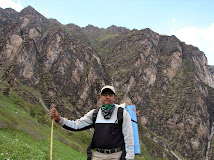
We are also fascinated by the fungus and just started a blog because we believe it is important to do it in a sustainable way. Otherwise Yarchagumba will be disappearing soon from the slopes of the Himalayan.
ReplyDeleteDaniel, its really nice to visit your blog. I am impressed with full of information,
DeleteWhere can I buy Yarsagumba in Kathmandu?
ReplyDelete9808249688
I have yarshagumba plz contact 9842052143
DeleteI need yarsagumba plz can u tal me how much par gram
Deleteplease visit our website for the best price of cordyceps
Deletehi
Deletei am intrested to buy Yarsha Gumba
pls send it
regards,
Mahendra
91 9725252246
Is there any buyers for yarsagumba....in India....I hv yarsagumba in gud quantity...contact 9816996997
DeleteI am interested please send me more information
DeleteI am interested please send mor information to my email angp33@yahoo.com
Deletehttp://hamrobazaar.com/detail.php?siteid=106440
ReplyDeletenow the rate of yarshagumbha is 1500000 per kg in Darchula this year.. what about in ktm..?
ReplyDeleteHi Gopichan,
DeleteDo you know any supplier in Nepal ? I am looking for about 3-5 kg.
Please reply me at namus57@gmail.com .
Hello
Deletefriends. If u need. Yarsagumba! In India so please. Contact Mr. Shankar. Verma. And Saturn anytime. (9910454299) mail us kunalsidh1991@Gmail.com. now session. Is comming
New. Session. Now start ing for. Yarsagumbu for buying content. Mr Shankar. And Saturn. Contact. No. 9910454299 kunalsidh1991@Gmail. Com
Deletehi i want to buy yarsagumba plz tell me price of 100 grm and where i get in india mail me at ashin.monty4u@gmail.com
Deletehi i have yarsagumba if any want to buy contact me on 9547860242 i can give you the best offer...........i am in india ..
Delete@ RCP I have this for sale if interested kindly mail me on kpisal4@gmail.com
ReplyDeleteif anyone wants yarsagumba plz call in this no.
ReplyDelete9841071647
Dr. Sharma
Dear Sir I Have A Gred yarsagumba pl.cot me 99996-20298
Deletewhere can i sale yarshagumba in dharan(nepal).rate Rs:15,00,000/-k.g. contact 9842052143
ReplyDeletehi all where is the liace in uttaranchal in find YARSHAGUMBA
ReplyDeletehi
ReplyDeletewhere I can get YARSHAGUMBA in Pakistan,
We can supply you cordyceps (yarsagumba) in pakistan from Nepal. Please contact us at: sales@nepl.com.np
DeleteSir if you want to buy Cordyceps contact me soon
Deletecontact no. 9808778572
I HAVE 5KG YARSAGUMBA CONTACT NO 9818405437
ReplyDeletehi give me pric pre greem how much plz thanku
Deletei want yarsigumba 2 kg but in nominal prices can u arrange me .
Deletemy contact no.is 09462404786:9887436710
IF you buy cordyceps (yarsagumba) then contact me
Delete9808778572
we have yarsagumba 15 kg please cont 09999620298 or dksingh_98@yahoo.in thanks
ReplyDeletei have lost yarsagumba u cont me 9999910287
ReplyDeletei have 10 kg yarsa gumba please contact me 8982868084
ReplyDeleteHi to Jagdish Chandra Chandola!
DeleteI've been trying to reach you on this number that you left (8982868084) and i'm constantly getting a not in service automate. is there any other number where you could be reached, please? I'm interested by ur yarsagumba stop.
Thank you!
Patrick @ jvnk2007@yahoo.ca
u can me mail this id jagdish.chandola28@gmail.com
Deleteu mail me this id jagdish.chandola 28@ gmail.com
Deletereply gbaba923@gmail .co
DeleteHi, email me on shopatnepal@gmail.com if you are still interested. I have 1.5 kg of yarsa from Darchula district of Nepal.
Deleteu can mail me gbaba923@gmail.com i have 5 kg early
Deleteu contact me gbaba923@gmail.com
Deletecall me8305717936
u can call me 8305717936
DeleteHI I M DEVENDER SINGH FROM CHAMOLI GARHWAL UTTARAKHAND IF SAMEBUDY WANT BY YARSAGUMBA PLEASE CONT.ME 09999620298 OR MY MAIL ADD.dksingh_98@yahoo.in thanks
ReplyDeleteI want sale some yarsagumba after one month. if i will find any buyer for good price then my last buyer. email: (nima_sherpa227@yahoo.com) Mobil no..:9849442753
ReplyDeleteI am interested in purchasing some Yarsagumba please email me with prices in US dollars.jbgels2711@gmail.com
DeleteIF you truely want to buy Yarsagumba u can contact me @ +977-9813564877.
ReplyDeleteFresh piece of yarsha gumba if anyone wants it please mail me at lakpa.011@gmail.com for more details.sample pieces will also be delivered.
ReplyDeleteAnd my rates will be reasonable!
new yarsha gumba are available now..
ReplyDeletesample pieces will also be delivered to places where demand.
if anyone needs
for more details mail me at lakpa.011@gmail.com
i am buyer contact me 9811690919
Deleteif u want yarsha gumba contact me manoj sharma from shimla { himachal pardesh }
Deletei appreciate your work. I am doing this business since 2009. Do you have any idea how to make international market of this goods in Nepal because this goods is selling from china internationally in the name of chines product.
ReplyDeleteHi Contact me at angp33@yahoo.com I can distribute for you
Deletehow much does it cost per kg in ktm? do rply me in mind_freek977@yahoomail.com.. its urgent..
ReplyDeleteI also have yarshagumbha
ReplyDeletei am buyer contact me 9811690919
Deletehi i am sohrab butt from pakistan i am sale yarsagumba 10 to 20 kg. any intrested please contact me shahroz087@gmail.com cell no +3644006670 or 03452782631
ReplyDeletei have 10-20 kg yarshagumba
ReplyDeletewanna buy yarsa gumba cell no +977-9849178676
ReplyDeletemail me. anglopchan@yahoo.com
Deletemail me. anglopchan@yahoo.com
Deletewanna buy yarshagumba cell no 9849178676
ReplyDeleteIF ANY ONE IN INDIA WANTS TO BUY YARTSAGUNBA OR CORDYCEPS PLEASE CONTACT ME ON THIS NUMBER +97517475746.
ReplyDeletePlease email me the price through the email: vuthoai@gmail.com. I would like to buy to sell in Vietnam
DeleteIf you have good quality and quantity then you can contact me at madhavgarg99@gmail.com
Deleteor you can call me at +91-9999994392
i hav 3 kg yarsagumba.filtered......anyone intrested with a good price can contact me...9843290729
ReplyDeleteIf you have good quality and quantity then you can contact me at madhavgarg99@gmail.com
Deleteor you can call me at +91-9999994392
if u went buy yarsagumba good qwality pl. cont. me 9999620298
DeleteIf You Went By Yarshagumba Plz Cont. Me Devender Singh 9999620298
DeleteYou Can Call Me 9999620298
Deletecontact me @ 9841373719 for yarshagumba
ReplyDeletei have 5 kg yarsha gumba contact me gbaba923@gmail.com &8305717936
ReplyDeleteour company needs some kgs of A and B grade yarshagumba if anyone have it now, contact soon at sanjiwaniherbal@yahoo.com
ReplyDeleteVisit www.sanjiwaniherbal.com.np
i have 10 kg yarha gumba contact me8305717936
DeleteIf you have good quality and quantity then you can contact me at madhavgarg99@gmail.com
Deleteor you can call me at +91-9999994392
hi i have yarsagumba if any want to buy contact me on 9163349256 can give you the best offer...........i am in india ..
Deletei have 10kg of yarsa gumba A grade quality from dolpa with rate of Rs.200000/kg.delivery within kathmandu valley contact me @9862624747.rate will also be negosiable..
ReplyDeleteplease call in my number 9841775136.
DeletePlease contact me through my email vuthoai@gmail.com. I want to buy two kg
DeleteIf you have good quality and quantity then you can contact me at madhavgarg99@gmail.com
Deleteor you can call me at +91-9999994392
Interested buyer of yarsagumba may contact me at rajjajue@gmail.com
DeleteI enjoyed it. Thanks for the sharing.... buy cialis in online
ReplyDeletei need 1kg yarsagumba - i am in nepal till 17 oct - 9818075446 - alex
ReplyDeletei have yarasagumba how much you need ,i m anurag from india
DeleteI have yarsagumba if any one interested mail me anuragec10@gmail.com
ReplyDeletei have 2 kg yarsha gumba if u interset call me 8305717936
ReplyDeletei like to buy cordyceps. Pls email me detail sizes of each with clear picture. golden one is preferable.
ReplyDeletejawaad.kyaw@gmail.com
Hello, im Mr Hung, im want to buy yarsagumba, pls email : sasana8899@gmail.com, call me 9818039898.
ReplyDeletethanks!
Hello ! i want to buy yarshagumpa, pls email : sasana8899@gmail.com, call me 9818039898
ReplyDeleteif anyone needs cordyceps sinensis(yarsa gumba). i have 3 kg pure quality yarsa gumba available in india. pls contact sharmavatan13@gmail.com
ReplyDeleteIf you have good quality and quantity then you can contact me at madhavgarg99@gmail.com
Deleteor you can call me at +91-9999994392
I have good quality 20 kg. I want to sale 18lakh per kg contact me +919857126649
DeleteHi, Im in need of Yarsa Gumba 5 Kg and more , pls contact me at rdeepakaj@gmail.com
ReplyDeleteI have written an email on above address. Contact me as soon as possible.
DeleteI have wrtten an email on above gmail address. Reply me as soon as possible.
DeleteThank you.
We can Supply Yarsagumba from MUMBAI it can different grades
ReplyDeleteThe different grade are
A = 3000 to 3500 pieces per kg
B = 3500 to 4500 pieces per kg
C = 4500 to 6000 pieces per kg
D = 6000 to 7500 pieces per kg
Contact: Sagar +91 9821321344
Hello. I'm looking for reliable supplier of YarsaGumba. Ready to buy in may (next month) 2-5 kg. Only fresh and best quality. In India or Nepal. Waiting for Your offer. Please, contact me via email: velmozhin@gmail.com. Sincerely Yours, Anthony.
ReplyDeleteReady to buy 2 kg of hi grade Yrsagumba.
ReplyDeletePlease, contact me: velmozhin@gmail.com
SERIOUS TRADING ON YARSAGUMBA.
ReplyDeletefreak_path@hotmail.com
you can mail me: chhetuptamang@gmail.com if you want yarsagumba of this season
DeleteYarsagumba Trading in Nepal
ReplyDeletefreak_path@hotmail.com
+9779744056007
As the season for Yarsagumba starts now!!!!!!!!
ReplyDeleteAre you ready to buy or sell it.
For any kind of trade maybe BUYING or SELLING.
Can be exported and imported too.
Contact - Madhav
madhavgarg99@gmail.com
Phoen - +91-9999994392
**Best Prices**Best Prices**Best Prices**
DeleteAs the season for Yarsagumba starts now!!!!!!!!
Are you ready to buy or sell it.
For any kind of trade maybe BUYING or SELLING.
Can be exported and imported too.
Contact - Robin
robin_070990@yahoo.co.in
Phone - +91-8285040090
This comment has been removed by a blog administrator.
ReplyDeletewe are registered herbal company having Yarsagumba of Manang district of Nepal containing 3200 pieces approximately per kg ( B GRADE YARSA ) at Nrs 2700000 ( 27 lakhs ) ..If anyone is interested in buying it, contact me, ATIT JOSHI at 9806701700 as soon as possible as we are running out of time for this season
ReplyDeletewe are registered herbal company having Yarsagumba of Manang district of Nepal containing 3200 pieces approximately per kg ( B GRADE YARSA ) at Nrs 2700000 ( 27 lakhs ) ..If anyone is interested in buying it, contact me, ATIT JOSHI at 9806701700 as soon as possible as we are running out of time for this season
ReplyDelete**Best Prices**Best Prices**Best Prices**
ReplyDeleteAs the season for Yarsagumba starts now!!!!!!!!
Are you ready to buy or sell it.
For any kind of trade maybe BUYING or SELLING.
Can be exported and imported too.
Contact - Robin
robin_070990@yahoo.co.in
Phone - +91-8285040090
If anybody is selling 100% real Yarsagumba at a reasonable price in India,I prefer in delhi, uttaranchal, uttar pradesh or himachal pradesh, please contact me: anandinni@gmail.com
ReplyDeleteif u want yarsagumba 100% real call me (manoj) from himachal (shimla)
DeleteHello, I am Chhetup Tamang from Kathmandu, Nepal. My mobile: +9779851054734 My email:chhetuptamang@gmail.com
DeleteEvery season, our 80 field workers collect 400 kg Yarsa Gumba ( Cordycepes Sinesis ) from Dolpa. I am looking for a big buyer from China or other country. If you are interested contact me about the rate, quality, pieces in a kg, photos.....we can talk in email or facebook.
best quality of Cordyceps from Bhutan for sale. write to me at tsheringd12@gmail.com
ReplyDelete~Yarsagumpa from Sikkim ~
ReplyDeleteFresh quality yarsagumpa from Sikkim picked 2 weeks ago in Stock NOW !!
All those interested please mail at yarsagumpa@gmail.com or ring @ +91-99333301242
Reasonably Priced and Guaranteed Freshness from the Mountains.
HURRY ! Stock moving Fast!
Hi ! I have yarsagumba for sell so serious buyers contact me 09832422146
ReplyDeleteDo you still have the stock?
DeleteHi im from Sikkim, and I want to sell yarsagumba of this season, so serious buyers may contact me on this no.+91 09547053201 or +91 9832422146 or mail me sang11in007@gmail.com
ReplyDeletei have yarsagumaba pls contact me 9560131989
ReplyDeletehi this yarsagumba it is not afect the hilth of human ben ??? i want answer
ReplyDeletehigh quality of yarsagumba from Dolpa, Nepal.anyone intrested?mail me(sumes_da2011@yahoo.com).
ReplyDeleteThis is the perfect blog for anyone who wants to know about this topic. It contains truly information.
ReplyDeleteviagra
if anyone interested in buying yarsagumba please feel free to mail @ pakatony@gmail.com
ReplyDeleteHigh quality yarsha gumba available in 5kgs.
ReplyDeleteSerious buyer can contact me .
M:- 9887871004
M:- 7790949594
High quality yarsha gumba available in 5kgs.
ReplyDeleteSerious buyer can contact me .
M:- 9887871004
M:- 7790949594
Asparagus available contact details :9849656092
ReplyDeletecoming to KTM 21 november
ReplyDeleteneed half to 1 kg depending on price and quality
please contact coveredspace@gmail.com
alex
I need half to 1 kg please contact coveredspace@gmail.com
ReplyDeletei have 10 kg yarsha gumba in nanital
ReplyDeletemail me jagdish.chandola@26gmail.com
call me 8305717936
Dear All I Went By Yarsha Gumba Pl. Cont.Devender 09999620298
ReplyDeleteyarsagumba in delhi available for sale buyer contact at ansari906@gmail.com
ReplyDeletei am intrest to buy Yarsha Gumba
Deletepls call me 9725252246
hi
Deletei am intrested to buy Yarsha Gumba
pls send it
regards,
Mahendra
91 9725252246
Yarshagumba Avilable In delhi Plz cont Me Devender 9999620298
Deletei wanna buy yarsha gumbea. if anyone have enough supple let me know.
ReplyDeleteif anyone have it to sell let me know.
ReplyDeletei have ,,,
Deletehi,,,i have
Deletei have 15 pieces of yarsagumba in kathmandu, if you need contact me lmgphysics@gmail.com
Deleteif you want by yarsa gumba plz.cont.me 9999620298
Deleteavailable in delhi buyer contact at ansari906@gmail.com
ReplyDeletehigh quality of yarsagumba grade-A.anyone intrested. sungava.33@gmail.com
ReplyDeleteif anybody want to buy cordyceps sinensis pls mail me singhdevesh077@gmail.com
ReplyDeleteI have yarsagumba. If anyone want to have it pls. Contact on 9163349256....... in india
ReplyDeleteYou can buy cordyceps sinensis of high grades in suitable market price form me.
ReplyDeletegradings are on the basis of pieces per kilogram and colour.mrmnepal@yahoo.com
You can buy cordyceps sinensis of high grades in suitable market price form me.
ReplyDeletegradings are on the basis of pieces per kilogram and colour.
If anybody is selling 100% real Yarsagumba at a reasonable price in India,I prefer in delhi, uttaranchal, uttar pradesh or himachal pradesh, please contact me: only serious buyer id lucky99958@yahoo.com mo number +91 9896486480
ReplyDeletehi myself pappu choudhary from,new delhi i want some yarsuguda pl;s contact me9350108108
ReplyDeleteI want to sale yarsagumba, whatsapp me at +919871801575
ReplyDeleteHi, We have surplus stock of YARSHAGUMBA with us, if anyone needs to place order or want to take for trial kindly contact on 8800719663. We can provide you the best quality
ReplyDeleteHi, We are in the planning of opening a office in New Delhi, Our head office is in Chamoli in Uttranchal where we have kept high quality of yarsagumba with us. If anyone is intrested to buy, please contact us on 8800719663
ReplyDeleteif Somebudy Went By yarshagumba Please Cont Me Devender Singh Mob No. 09999620298
ReplyDeleteYARSHA GUMBA Byer Please Cnt Me Devender Mob No.09999620298
ReplyDeleteI need yarsagumba if any body want to sell contact me
ReplyDeleteHi ,
ReplyDeleteI have 35 Kgs of A class and B Class Yarsagumba .Serious Buyers can contact me at ravinder.261987@gmail.com . I can send samples also .
hi to ravinder kaushik....i am interested into buy yarsagumba...2 kg...please quote your rate to sell.
DeleteThanks.
Deepak
HI TO RAVINDER KAUSHIK....I AM INTERESTED INTO BUY YARSAGUMBA 2 KG...PLEASE QUOTE ME YOUR RATES.
DeleteHello, i need class A or B Yarsagumba 1 kg for my personal use, if you have this in stock kindly send me the best price and sample on my email. javidakk@gmail.com
DeleteI'm interested in buying yarshagumba
ReplyDeletePlz contact me +256750303786 or email me
rulimited@gmail.com
exports.majestic@gmail.com
Those who are really interested to buy yarsagumba....from Sikkim....email me
Deletepurnimak50@gmail.com
pl contact on pbisht_70@yahoo.co.in
Deleteplease contact +91 9940972424
Deletegowriisankar
bluez consultancy
chennai
Hi Karim,
DeleteAre you interested in buying Yarsagumba/Cordycep from Bhutan?
I'm interested in buying yarshagumba
ReplyDeletePlz contact me +256750303786 or email me
rulimited@gmail.com
exports.majestic@gmail.com
You can contact me at 00975-17555557 or wechat me with the above given no....
ReplyDeleteI am interested in Yarsagumba and requesting you to quote the rate and requesting you to send us the samle to PHARMAX HEALTHCARE, 4-7-57, FF 3 & 4, SARASWATHI COLONY, BAPUJI NAGAR, NACHARAM,HYDERABAD-500076
ReplyDeleteI am interested in Yarsagumba and requesting you to quote the rate and requesting you to send us the samle to PHARMAX HEALTHCARE, 4-7-57, FF 3 & 4, SARASWATHI COLONY, BAPUJI NAGAR, NACHARAM,HYDERABAD-500076
ReplyDeleteif any any one have gold color yarshagumba, please write me : bishnuasyl@gmail.com
ReplyDeleteIn Myanmar also we have Yarshargumba to sell. You can get in June, July and August.intersted benjamin.lw123@gmail.com
ReplyDeletei m intrested to yarsagumba
ReplyDeletepls call me.
09725252246
mahendra
ReplyDeleteWe are urgently in need of kidney donors for the sum of
$280,000.00 USD, Contact us now on email for more details.
(appolohospital1@gmail.com)
Also call me on +91 812 390 7649
Dr. Walter Kumar
INDIA
Hello from BHUTAN. We are looking for a Cordycep aka Yarsagumba international buyer. If interested, please contact: 00975-17457911/00975-77619545 or email us at: subba.ashmita@gmail.com
ReplyDeleteDear Shiva Ji,
ReplyDeleteI have seen your blog really a good information has been given in you blog about Yarsargumba and through the blog I came to know actual prize of it in international market.
Shiva Ji could you help me in finding buyers of international market, the way to find out buyers I would like to know.
Thanking You,
Sachin Kumar
Hello I need yarsagumba if anyone have in good price contact me mail me on Rudraksha1008@gmail.com
ReplyDeleteAll grade are accepted
This comment has been removed by the author.
ReplyDeletehello every body, i am looking for yarshagumba A & B Grade. I need 3kgs, so guys will you send me detail and wise rate(sungava.33@gmail.com).
ReplyDeleteHi I am looking to buy yarsagumaba (keera jari) for personal medicinal use of 200 gms quantity on immediate cash basis. genuine suppliers or stockist pls contact me on 9837055678 or vigyanlime@yahoo.com
ReplyDeletehello! Yarshagumba/caterpillar fungus available in Dehradun,india intrested buyer can contact me mahirautela2020@gmail.com
ReplyDeleteprice rate are local rate 150000/kg
We are urgently in need of kidney donors
ReplyDeletein Appolo Hospitals India for the sum of $290,000.00 USD,
Contact Dr.Dave Gray now on email for more details.
(appolohospitals05@gmail.com)
We are urgently in need of kidney donors
ReplyDeletein Appolo Hospitals India for the sum of $290,000.00 USD,
Contact Dr.Dave Gray now on email for more details.
(appolohospitals05@gmail.com)
We are urgently in need of kidney donors
ReplyDeletein Appolo Hospitals India for the sum of $290,000.00 USD,
Contact Dr.Dave Gray now on email for more details.
(appolohospitals05@gmail.com)
We are urgently in need of kidney donors
ReplyDeletein Appolo Hospitals India for the sum of $290,000.00 USD,
Contact Dr.Dave Gray now on email for more details.
(appolohospitals05@gmail.com)
hi contact me if you need caterpillar fungus @ forestseedco@gmail.com
ReplyDeleteHi ! I have yarsagumba for sell so serious buyers contact me [manoj from shimla himachal pardesh ]call me 9857900603 or mail,me at manojs896@gmail.com
ReplyDeletei have a,b,c, grade,,,,
Hello, This is javid, i am looking for Yarshagumba A & B grade, I need 1kg, for my personal use, so please send me the details and good price. you can contact me on my mail javidakk@gmail.com
ReplyDeleteNew season has arrive. We are collecting from 29 may.Interested buyer can contact us(sungava.33@gmail.com).
ReplyDeleteOriginal caterpillar fungus available...I could supply so interested can contact me at Bhutan here in tashifinso1@gmail.com
ReplyDeleteI could provide the organic caterpillar fungus from Bhutan so interested can contact me here at tashifinso1@gmail.com
ReplyDeleteHello everyone ,
ReplyDeleteI am a small consumer from Canada.
I need Like 1 once of the yarshagumba
to taste it here with several friends .
The fresh yarshagumba red head .
Please e-mail me your best price And conditions
at : saidlahlou@gmail.com
By the Way you have Nice local blog .
Thank you .
We are collecting yarsagumba from 29 may.Interested person can contact us(sumes_da2011@yahoo.com)
ReplyDeletei want 1 kg yarshagumpa from collecting person..can i know the rate exactly ..contact me.(chhetribishal51@gmail.com)mob.8348557578
ReplyDeleteContact purnimak50@gmail.com
Deletei want to purchase in pakistan.
ReplyDeletecontect num +923057667786
I want to sell yarsagumba. Interested person may contact 9774226457.
ReplyDeleteNEED YARSAGUMBA 100 GRAMS OR 300 PCS FOR PERSONAL USE. I AM FROM PATNA , BIHAR
ReplyDeleteMAIL - kalashmondal@yahoo.in
i wanna sell yarsagumba if you are interested mail me at tpalzor23@gmail.com
ReplyDeleteif you are looking for yarsagumba then mail me at tpalzor23@gmail.com
ReplyDeletei have yarsaghumba and it cost 6 lakhs per kg ,,, if anybody interested call me on 977 9846077179
ReplyDeleteif anybody likes to buy yarsaghumba please contact me on 977 9846077179 or green grass_2002@yahoo.com ,,, per kg it cost 6 lakh nepali rupee .
ReplyDeleteIf u are interested to buy fresh yarsagumba from Sikkim with good quality with best price ..
ReplyDeletePlz contact soon purnimak50@gmail.com
Hi i am from darchula ,nepal and have 4 kg yarcha if you want to buy please contact 9741367796.
ReplyDeleteI have 1.2 kg fine Quality yarshagumba 1600 to 1800 pcs per kg...from high altitude of dolpa. and 1 kg of medeium quality which goes 24 to 26 pcs in per kg.If u r intrested to buy than i will show u sample...if u satisfy than i will give u 20% discount frm running rate.intreasted can mail me. painnnnn@gmail.com
ReplyDeleteif you are interested in buying yarsa gumba from arunachal, india, contact 9862669907
ReplyDelete2-3 kg freshly collected and dried available email aniyanglego@yahoo.in
Need yarsagumba. We need more than 5 kg. Please contact us: oleg17m@outlook.com
ReplyDeleteWe are interested to buy yarsagumba every year. We need more more. Please contact us by mail Oleg17m@outlook.com
ReplyDeleteNeed yarsagumba. We need more than 5 kg. Please contact us: oleg17m@outlook.com
ReplyDelete